基礎理論ガイド

このページでは、解剖学・運動学・生理学を中心とした基礎理論の記事を体系的に紹介します。身体構造→運動メカニクス→生理学的反応という流れで整理し、初学者でも無理なくステップアップできる学習ルートを提案。各分野のおすすめ記事や連載へのリンクから、目的に応じて必要な知識へスムーズにアクセスできます。
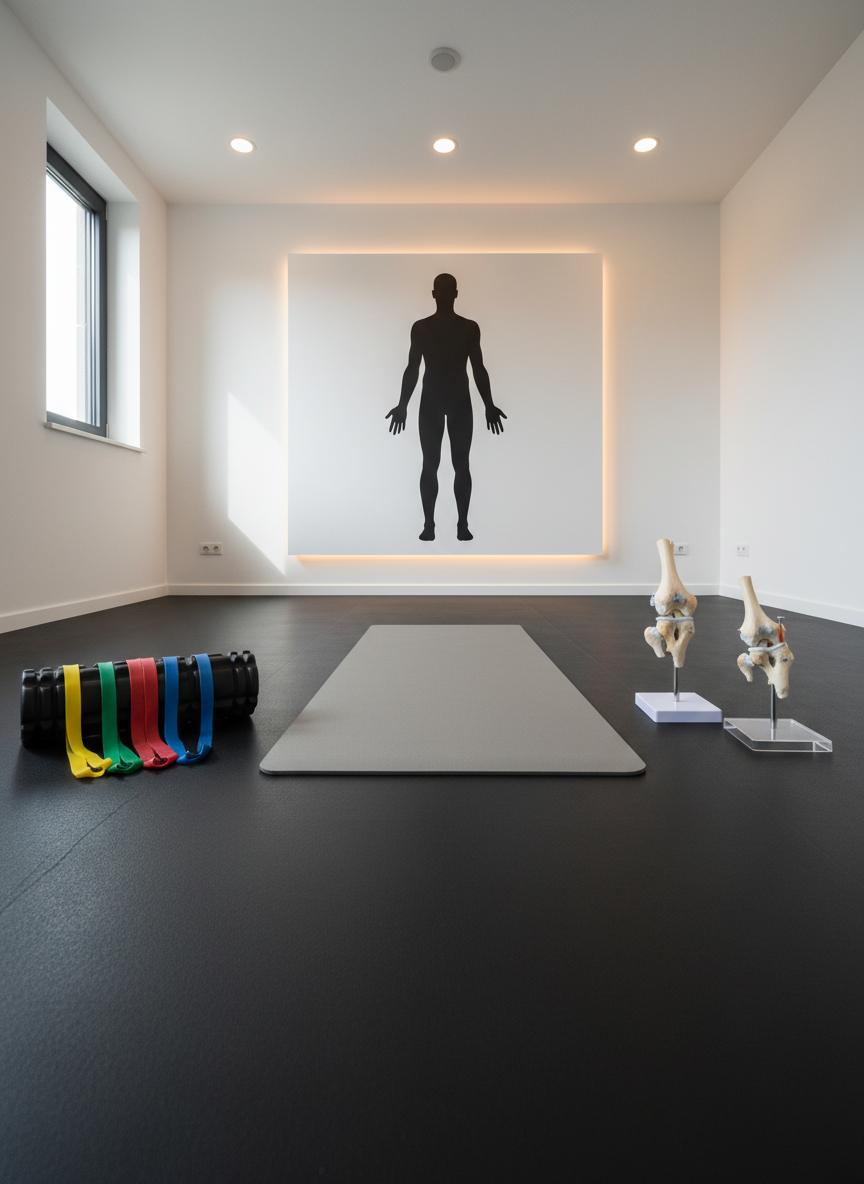
A pristine exercise space in a medical fitness facility, centered on a high-quality, neutral-gray yoga mat aligned precisely on a matte rubber floor. Around it, neatly organized evidence-based training tools such as color-coded resistance bands, a textured foam roller, and a pair of anatomically realistic joint models of the hip and ankle. In the background, a large, wall-mounted, text-free posture chart silhouette introduces context for movement assessment. Warm but soft overhead lighting blends with indirect daylight from a side window, producing gentle highlights and clean, soft shadows. Photographic realism, wide-angle lens at eye level, with a balanced, uncluttered composition that feels calm, professional, and optimized for therapeutic exercise instruction.
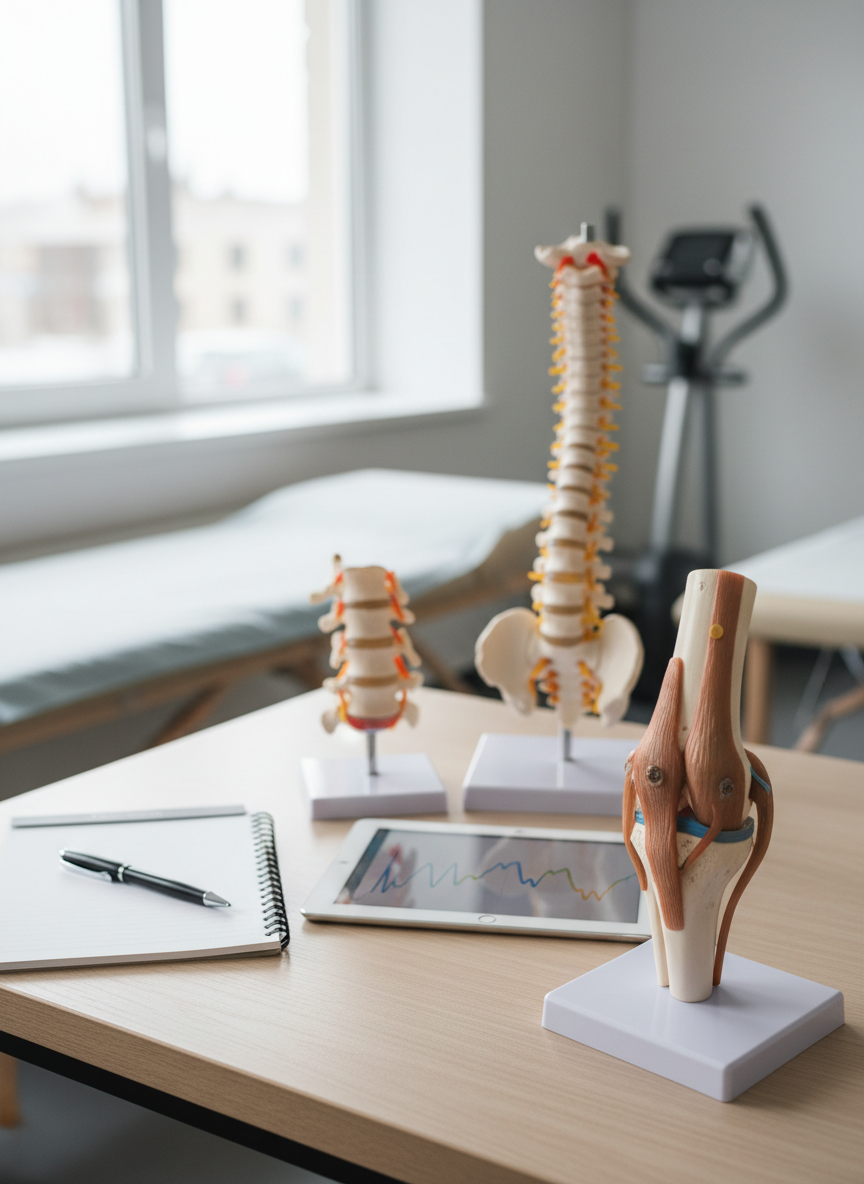
A set of articulated anatomical limb models, including a detailed knee, shoulder, and spine segment, carefully arranged on a light wood desk in a bright rehabilitation clinic. Each model shows ligaments, tendons, and joint surfaces with precise, natural coloration and texture. Beside them lies an open blank notebook and a digital tablet displaying an abstract, text-free motion graph. Soft overcast daylight filters through a nearby window, creating even, clinical lighting with minimal shadow. Photographic realism, shot from a slightly elevated angle using the rule of thirds, with a gentle bokeh effect on the distant treatment beds. The mood is methodical, scientific, and focused on movement evaluation and clinical reasoning.

基礎理論ナビ

解剖学・運動学・生理学・発達運動学・脳神経学・評価学など、RAS Academy School の基礎理論を俯瞰できるマップです。各分野の役割と関係性を整理しながら、「いまの自分はどこから学ぶべきか」が一目でわかるよう構成しています。まずは全体像をつかみ、ご自身の専門性や関心に合った入り口を選んでください。

基礎記事一覧

各基礎カテゴリごとの代表記事・連載が自動で一覧表示されます。まずは興味のある分野から1本選んで読み進め、評価やエクササイズにどうつながるのかを意識しながら学習を深めていきましょう。
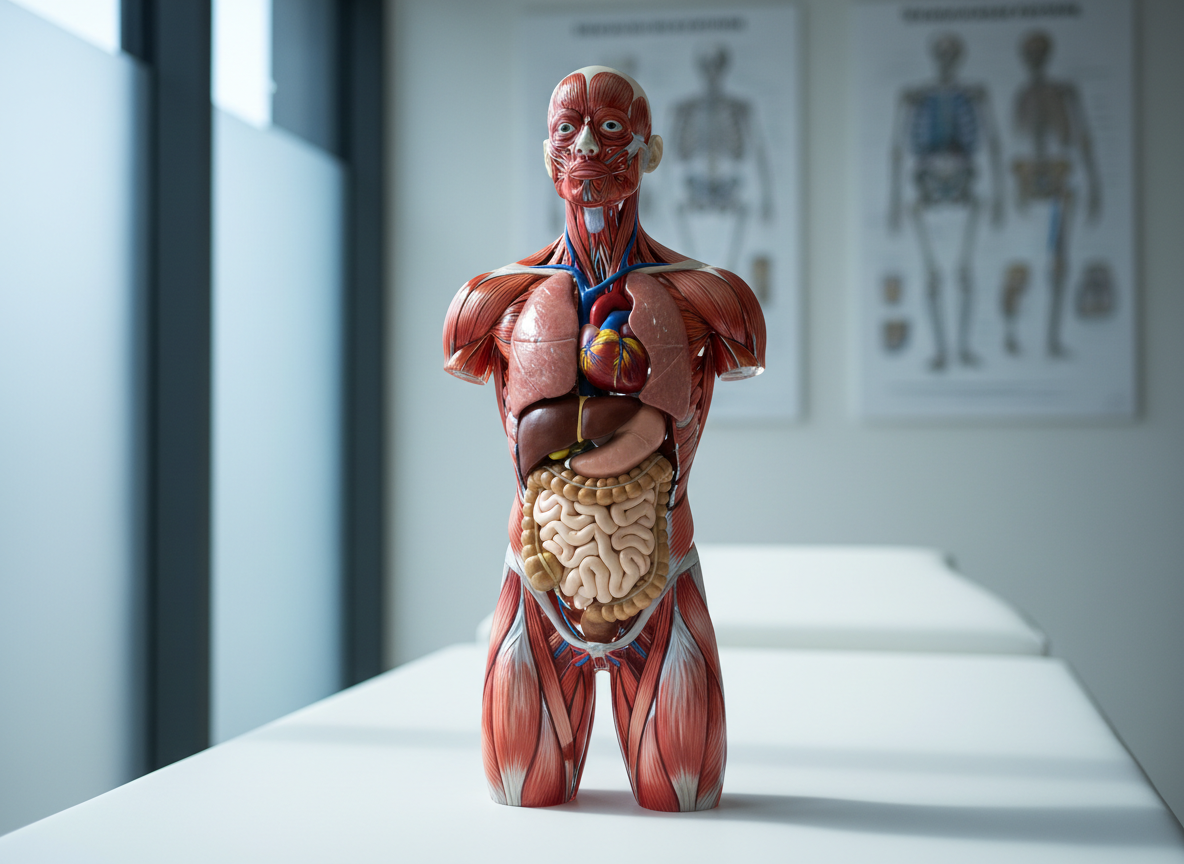
A highly detailed, anatomically accurate transparent human torso model made of clear resin, revealing muscles, bones, and major organs in vivid, realistic colors. It stands upright on a clean white examination table in a modern clinical assessment room. Behind it, there is a softly blurred wall with skeletal charts and joint diagrams, all without visible text. Cool, diffused daylight from a large frosted window illuminates the scene, creating crisp reflections on the smooth surfaces and subtle shadows beneath the model. Photographic realism, eye-level composition, moderate depth of field focusing sharply on the torso, with a calm, professional, evidence-based atmosphere suitable for a health and anatomy education blog.
A pristine exercise space in a medical fitness facility, centered on a high-quality, neutral-gray yoga mat aligned precisely on a matte rubber floor. Around it, neatly organized evidence-based training tools such as color-coded resistance bands, a textured foam roller, and a pair of anatomically realistic joint models of the hip and ankle. In the background, a large, wall-mounted, text-free posture chart silhouette introduces context for movement assessment. Warm but soft overhead lighting blends with indirect daylight from a side window, producing gentle highlights and clean, soft shadows. Photographic realism, wide-angle lens at eye level, with a balanced, uncluttered composition that feels calm, professional, and optimized for therapeutic exercise instruction.
A set of articulated anatomical limb models, including a detailed knee, shoulder, and spine segment, carefully arranged on a light wood desk in a bright rehabilitation clinic. Each model shows ligaments, tendons, and joint surfaces with precise, natural coloration and texture. Beside them lies an open blank notebook and a digital tablet displaying an abstract, text-free motion graph. Soft overcast daylight filters through a nearby window, creating even, clinical lighting with minimal shadow. Photographic realism, shot from a slightly elevated angle using the rule of thirds, with a gentle bokeh effect on the distant treatment beds. The mood is methodical, scientific, and focused on movement evaluation and clinical reasoning.